The Career Path of an Arborist.
One of the biggest misconceptions about arboriculture is that there isn't a long term career in it.
When many people think of tree surgery, they picture chainsaws, climbing ropes and hard physical work. What they don't see is the structured career pathway, professional development and earning potential available to those who are prepared to invest in themselves.
At Beechwood Trees and Landscapes Ltd, we've spent a lot of time thinking about how we develop the next generation of arborists. Like many businesses in our industry, we've seen the ongoing shortage of skilled arborists. Rather than waiting for the problem to solve itself, we've decided to build the solution by creating a clear development pathway from trainee through to senior leadership roles.
The result is complete transparency around progression, responsibilities, training and salary expectations.
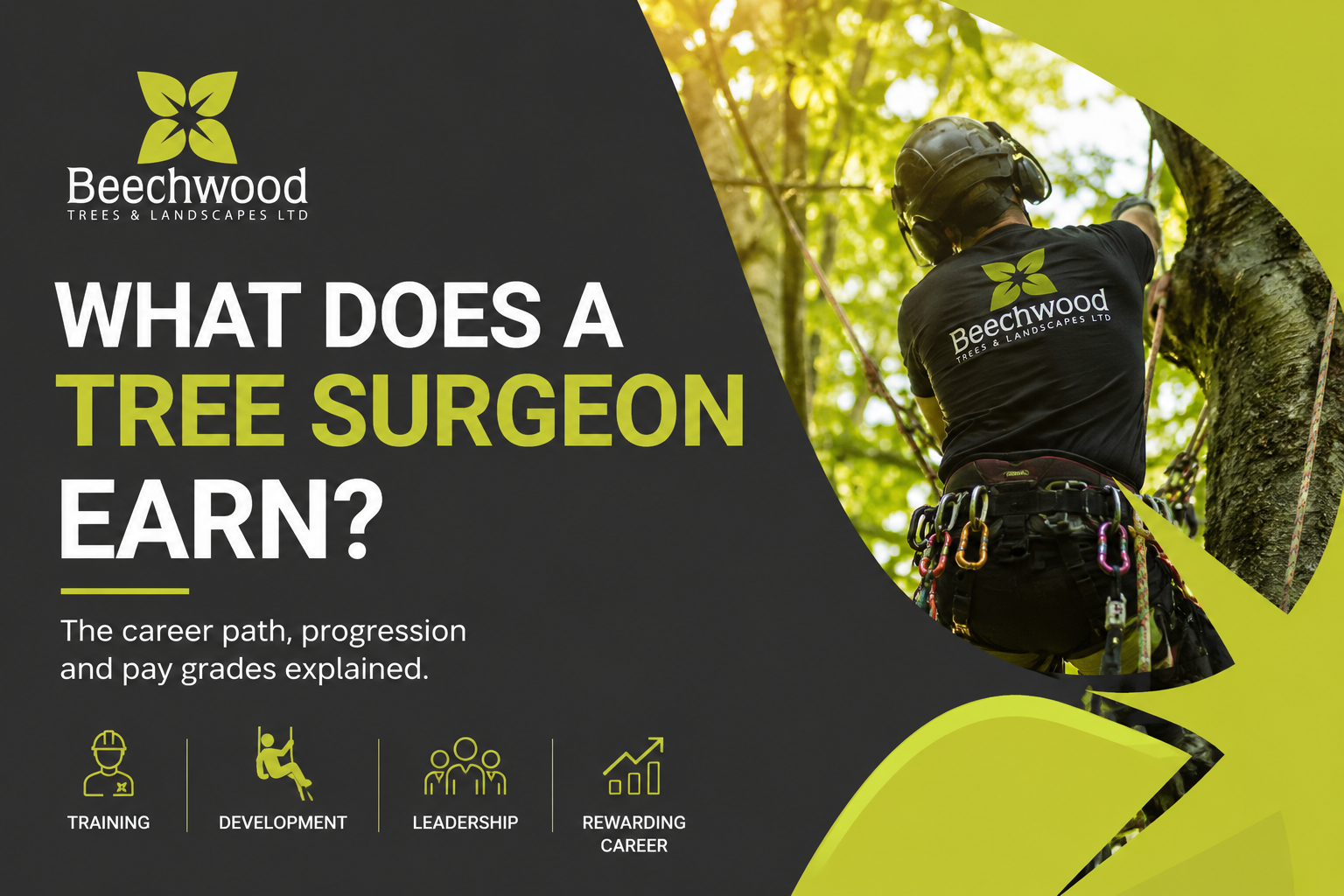
Typical Salary Progression
Induction and Trainee Groundworker
Starting salaries align with National Minimum Wage and Apprenticeship requirements, ensuring individuals can begin earning whilst learning the trade.
Junior Groundworker (Saw User): £22,100 – £28,100
At this stage, operatives gain chainsaw qualifications, chipper certification and begin undertaking ground-based tree work independently.
Trainee Climber: £24,000 – £28,100
Trainees begin learning aerial rescue, climbing systems and safe movement within the tree canopy.
Junior Climber: £26,000 – £30,000
Arborists begin carrying out supervised pruning operations, aerial cutting and light dismantling work.
Becoming an Arborist
After gaining climbing qualifications, aerial rescue competence and production climbing experience, individuals progress into the role of Arborist or Climber.
This is where arborists begin to take ownership of their work, develop technical competence and become valuable members of operational teams. Responsibilities include climbing operations, aerial pruning, dismantling, rigging and maintaining high safety standards on site.
Typical salary: £28,000 - £34,000
For many people, this would be considered the traditional "tree surgeon" role. However, at Beechwood, we see it as just the beginning.
Lead Climber and Trainee Team Leader
As arborists gain experience, they begin supporting junior staff, mentoring trainees and taking greater responsibility for equipment, planning and site leadership.
The next step is becoming a Lead Climber or Trainee Team Leader.
Typical salary progression:
Lead Climber: £30,000 - £32,000
Trainee Team Leader: £32,000 - £35,000
At this stage, technical ability alone is no longer enough. Communication, leadership and decision-making become equally important. Team members start delivering site briefings, supporting planning activities and helping shape the culture of the business.
Team Leader
Team Leaders are responsible for the safe and efficient delivery of works on site.
They manage teams, communicate with clients, oversee risk assessments, ensure quality standards are met and act as the link between operations and management.
Typical salary: £35,000 - £38,000
This is often the point where arborists begin to realise that arboriculture offers far more than simply climbing trees. It becomes a genuine profession with leadership opportunities and long-term career prospects.
Senior Arborist and Technical Leader
For those who want to become the best in the industry, the pathway continues.
Senior Arborists act as mentors, technical specialists and operational leaders. They support audits, training, advanced rigging operations and help develop the next generation of arborists.
Typical salary: £38,000 - £42,000+
Alongside salary progression, Senior Arborists at Beechwood receive additional benefits, recognition and development opportunities as they establish themselves as industry leaders.
Beyond the Trees
One of the biggest myths in arboriculture is that your career stops when you stop climbing.
In reality, some of the most rewarding roles sit beyond operational tree work.
Our development framework creates opportunities to progress into:
Operations Training
Health and Safety Leadership
Client Liaison
Contract Management
Operational Management
Business Leadership
These positions allow experienced arborists to apply their knowledge, mentor others and help shape the future of the industry.
Why Transparency Matters
We believe people perform at their best when they understand what success looks like.
Too often, talented arborists leave the industry because they cannot see a future. They don't know what training they need, what opportunities exist or how their earnings can develop over time.
By creating a transparent pathway with defined stages, qualifications, responsibilities and salary bands, we're giving people a reason to stay, develop and build a long-term career in arboriculture.
The Future of Arboriculture
The arboricultural industry needs more than skilled climbers. It needs leaders, mentors, trainers and professionals who are passionate about developing others.
That's why we've invested heavily in our people and created a framework that allows individuals to see exactly where they are today and where they could be tomorrow.
Because arboriculture isn't just a job.
It's a career.
And for those prepared to invest in themselves, the opportunities have never been greater.