Oak Processionary Moth (OPM): Identification, Risks and How Beechwood Can Help
Oak Processionary Moth (OPM) has become one of the most significant tree health and public safety concerns affecting oak trees across parts of the UK. Originally introduced from mainland Europe, the pest continues to spread and presents serious risks to both tree health and human wellbeing.
At Beechwood Trees and Landscapes Ltd, we work with local authorities, housing associations, commercial clients and private landowners to identify, manage and mitigate the risks associated with OPM.
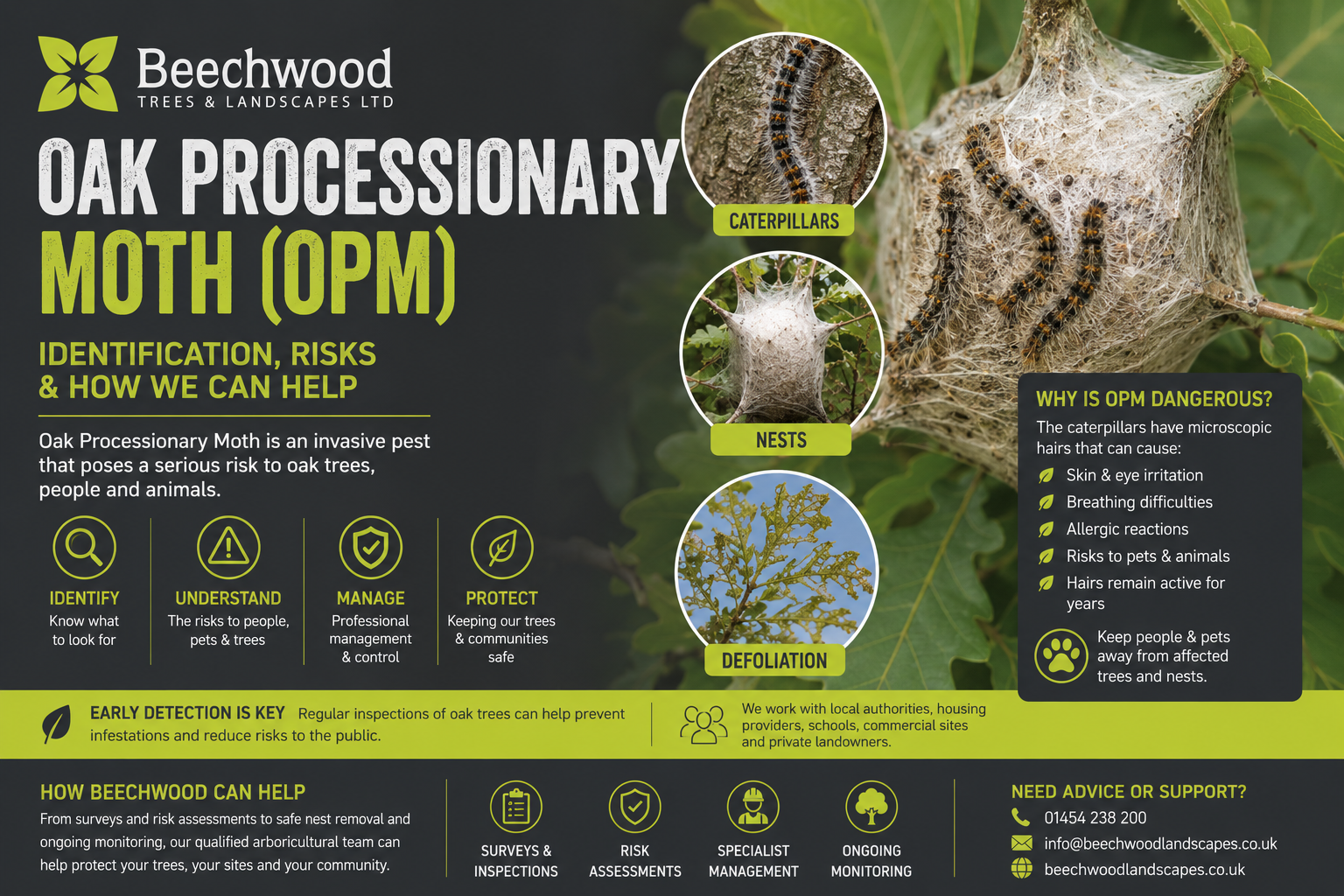
What is Oak Processionary Moth?
Oak Processionary Moth (Thaumetopoea processionea) is an invasive species whose caterpillars feed on oak trees during spring and early summer. The name comes from the distinctive behaviour of the caterpillars, which travel nose-to-tail in long "processions" across tree trunks and branches.
While the adult moth itself poses little threat, the caterpillar stage can cause extensive damage to oak trees and create significant public health concerns.
How to Identify OPM
There are several key indicators to look out for:
Caterpillars
OPM caterpillars are:
Greyish-black in colour
Covered in thousands of tiny white hairs
Typically found between May and July
Often travel in distinctive head-to-tail processions
Nests
One of the easiest ways to identify OPM is by spotting their nests.
These nests are:
White, grey or silvery in appearance
Often attached to trunks or larger branches
Made from silk, shed skins and caterpillar hairs
Variable in size, ranging from golf-ball sized to much larger masses
Defoliation
Affected oak trees may show:
Partial or complete loss of leaves
Reduced vigour
Stress symptoms during repeated infestations
Increased susceptibility to secondary pests and diseases
Why is OPM Dangerous?
Unlike many tree pests, OPM is not just a tree health issue.
The caterpillars possess microscopic urticating hairs containing a protein called thaumetopoein. These hairs can become airborne and remain active for several years, even after the caterpillars have left the nest.
Risks to People
Contact with OPM hairs can cause:
Severe skin irritation and rashes
Eye irritation
Sore throats
Respiratory issues
Allergic reactions
Asthma attacks in susceptible individuals
Risks to Animals
Dogs and other animals can also be affected, potentially suffering from:
Mouth and tongue irritation
Excessive salivation
Breathing difficulties
Veterinary emergencies following contact
Current Distribution in the UK
OPM is primarily concentrated within Greater London and surrounding counties. However, the pest continues to spread through natural movement and the transportation of infected oak trees.
The Forestry Commission maintains designated OPM management zones and regularly updates guidance on areas affected by the pest.
Landowners and managers should remain vigilant, particularly when managing oak trees within or near established outbreak areas.
What Should You Do if You Suspect OPM?
If you believe you have identified Oak Processionary Moth:
Do Not:
Touch caterpillars
Disturb nests
Attempt to remove nests yourself
Use pressure washers or garden equipment near affected trees
Do:
Keep people and animals away from the area
Take photographs from a safe distance
Record the location
Contact a qualified arboricultural contractor
Report findings where required
Attempting to remove nests without specialist training and protective equipment can increase the risk of exposure and spread.
How Beechwood Trees and Landscapes Can Help
Our qualified arboricultural teams can provide:
Survey and Inspection Services
We undertake detailed inspections of oak trees to identify signs of OPM and assess the level of infestation.
Risk Assessments
Our team can assess public safety risks around:
Parks
Housing estates
Schools
Highways
Commercial premises
Public open spaces
Management and Control
Where OPM is confirmed, we can assist with:
Safe exclusion zones
Specialist nest removal
Ongoing monitoring
Tree health assessments
Recommendations for future management
Contract Support
Beechwood already supports local authorities, housing providers and commercial clients with proactive tree management programmes. OPM monitoring can be incorporated into existing inspection and maintenance schedules to reduce risk and ensure compliance.
Early Detection is Key
The earlier Oak Processionary Moth is identified, the easier it is to manage. Regular inspections of oak trees can help prevent infestations becoming established and reduce risks to the public.
If you are responsible for managing oak trees and would like advice, inspections or support with OPM management, contact Beechwood Trees and Landscapes Ltd. Our experienced arboricultural team can help protect your trees, your sites and the people who use them.