Tree Condition Survey vs BS5837 Survey – What’s the Difference?
It’s a question we get asked regularly:
“I need a tree survey – which one do I actually need?”
Tree surveys aren't all the same, and commissioning the wrong type can mean paying for information that doesn't actually meet what you need it for.
Two of the most common are a tree condition survey and a BS5837 survey.
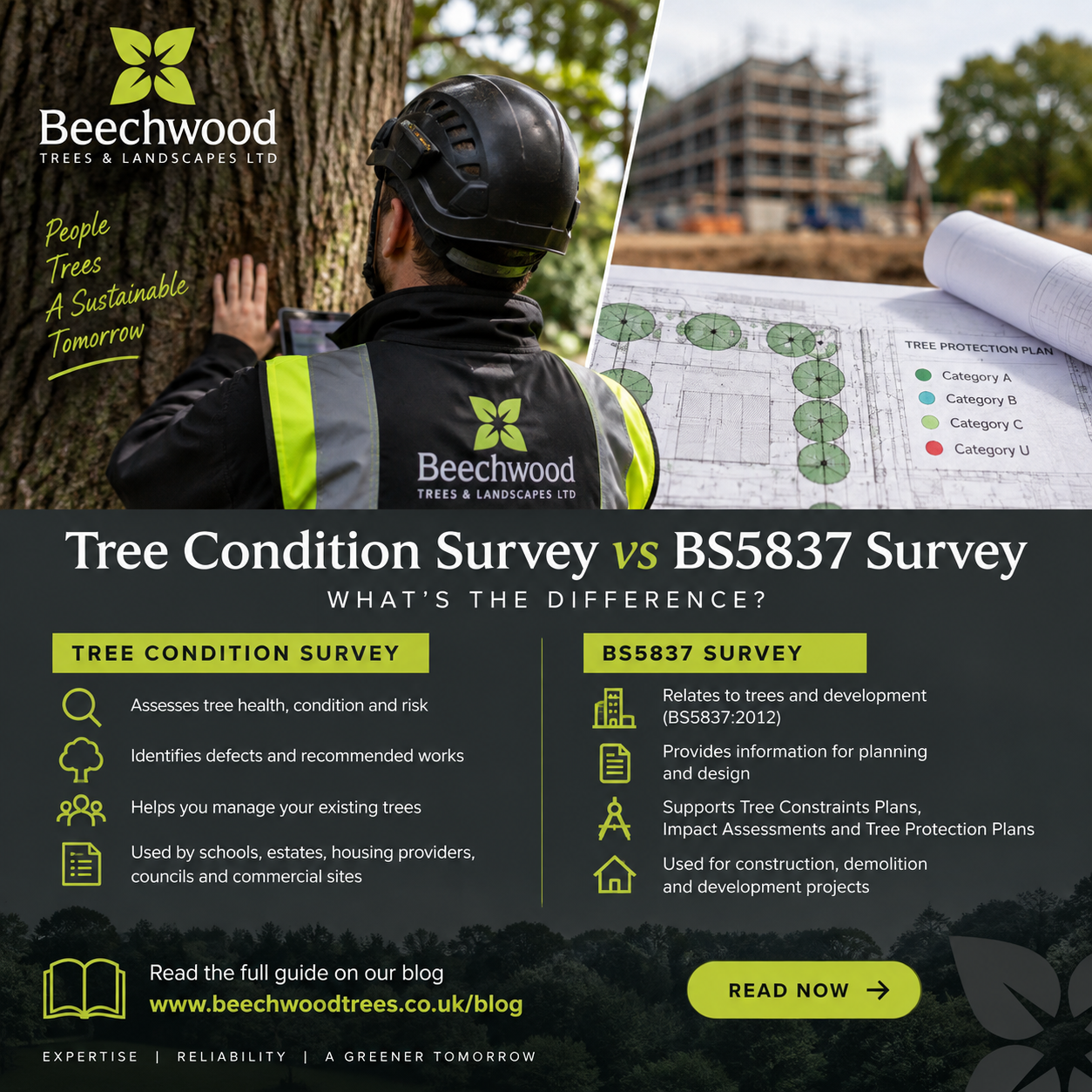
Tree Condition Survey
A tree condition survey is primarily about managing existing trees and identifying risk.
It is commonly used by schools, housing associations, councils, commercial estates, healthcare sites, managing agents and other organisations responsible for trees.
The survey will typically look at things such as:
Tree species, size and general condition
Visible defects or signs of decline
Dead, damaged or potentially hazardous branches
Fungal fruiting bodies and other indicators of decay
The tree's relationship with people, buildings, roads and other targets
Recommended remedial works
Priority or timescale for those works
Recommendations for further investigation where necessary
The purpose is to give the tree owner or manager a clear picture of their tree stock and help them manage it appropriately.
For larger estates, the information can also form the basis of an ongoing inspection and tree-management programme.
BS5837 Tree Survey
A BS5837 survey is different.
BS5837:2012 relates to trees in relation to design, demolition and construction.
If you're planning a development, extension, new building, access road or other construction work where existing trees could influence the design or potentially be affected by the works, this is normally the type of arboricultural survey that will be required.
The survey records and categorises the relevant trees and provides information that can be used by the design and planning team.
Depending on the project, this can then feed into further arboricultural information such as a Tree Constraints Plan, Arboricultural Impact Assessment, Tree Protection Plan and Arboricultural Method Statement.
So which one do I need?
A simple way of looking at it is:
Managing trees on an existing site?
You probably need a Tree Condition Survey.
Planning construction or development around trees?
You probably need a BS5837 Survey.
There can be situations where both are relevant, but they serve different purposes.
One is primarily about understanding and managing your existing tree stock.
The other is about understanding how trees interact with a proposed development and how they should be considered through the planning and construction process.
Why getting the brief right matters
Before commissioning any tree survey, tell the arboricultural consultant why you need it.
Are you trying to manage tree safety across a school estate? Preparing a planned maintenance programme? Responding to concerns about a particular tree? Or submitting information to support a planning application?
A good survey starts with the right brief.
At Beechwood, our surveying team works with clients across commercial estates, housing, education, healthcare and the public sector, from individual sites through to larger tree portfolios.
If you're unsure which survey you require, get in touch before commissioning it. A short conversation at the beginning can make sure you're paying for the right survey and getting information you can actually use.