Is Your Box Hedge Being Eaten Alive?
The Growing Problem of Box Tree Caterpillar
If you've noticed your box hedge suddenly turning brown, covered in webbing or looking like it's been stripped bare overnight, you're not alone.
Over the last few years, we've seen a huge increase in the number of enquiries relating to Box Tree Caterpillar, a pest that is rapidly spreading across the UK and causing significant damage to box hedges, topiary and ornamental planting.
What often starts as a few nibbled leaves can quickly become a hedge that looks beyond saving.
The good news? If caught early, there is often something that can be done.
What is Box Tree Caterpillar?
Box Tree Caterpillar is the larval stage of the Box Tree Moth, an invasive species that first arrived in the UK in 2008.
Since then, it has spread across much of the country and has become one of the biggest threats to box plants.
Unlike many garden pests that nibble away at a few leaves, Box Tree Caterpillars can completely defoliate a hedge in a matter of weeks.
For anyone who has spent years maintaining a beautiful box hedge or topiary feature, the results can be devastating.
What Should You Look Out For?
The challenge with Box Tree Caterpillar is that many people don't notice the problem until significant damage has already occurred.
Common signs include:
Webbing Throughout the Hedge
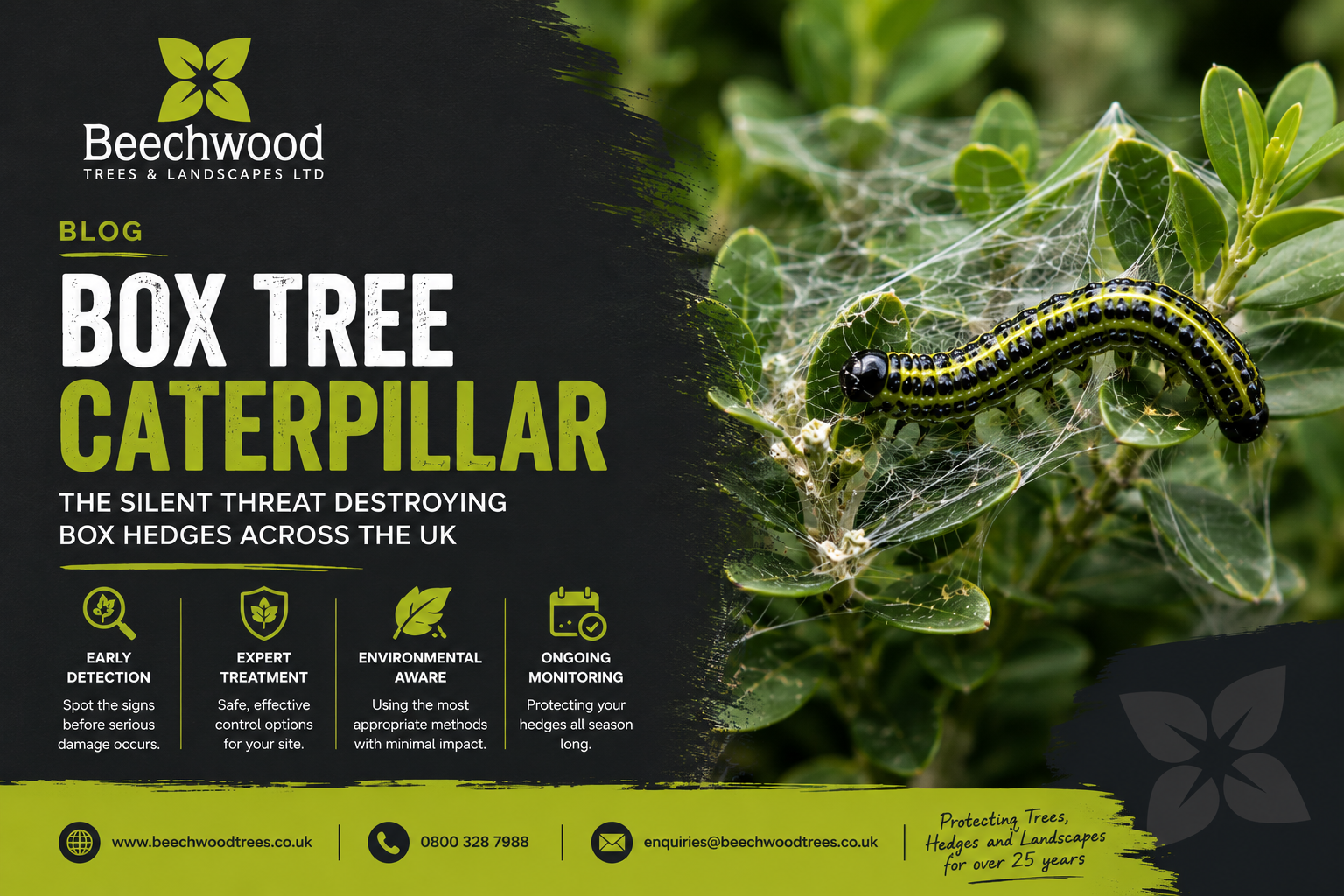
Fine silk webbing is often one of the first visible signs.
Leaves Being Eaten
The caterpillars feed aggressively on box leaves, leaving plants looking thin and patchy.
Green and Black Caterpillars
You may spot green caterpillars with black stripes hiding within the foliage.
Brown or Dead Areas
As the infestation progresses, entire sections of hedge can turn brown and appear dead.
Small Droppings
Dark pellets often collect within the hedge or on the ground below.
If you see any of these symptoms, it's worth acting quickly.
Why Are We Seeing More of It?
Unfortunately, the UK's climate is proving increasingly favourable for Box Tree Caterpillar.
Warmer temperatures allow multiple breeding cycles throughout the year, meaning infestations can build rapidly between spring and autumn.
Unlike in their native environment, there are relatively few natural predators here capable of keeping numbers under control.
As a result, the problem isn't going away anytime soon.
Can Your Hedge Be Saved?
In many cases, yes.
We've seen heavily affected hedges recover well following early intervention and ongoing management.
However, where infestations are left unchecked, repeated attacks can weaken plants significantly and eventually lead to their loss.
That's why early identification is so important.
What Are the Treatment Options?
Every situation is slightly different, but effective management typically involves a combination of monitoring, treatment and ongoing inspection.
Depending on the severity of the infestation, options may include:
Regular Monitoring
Spotting an infestation early is often the difference between a straightforward treatment and extensive damage.
Physical Removal
Smaller infestations can sometimes be removed manually or through targeted pruning.
Biological Controls
Specialist biological treatments can be highly effective whilst minimising impacts on the wider environment.
Professional Treatment Programmes
Where infestations are more established, targeted treatment may be required to prevent further damage and reduce future outbreaks.
Are Treatments Safe?
This is one of the most common questions we're asked.
The answer is yes, when carried out correctly.
At Beechwood, we assess every site individually before recommending a treatment strategy.
We always consider:
Public access
Children and pets
Wildlife and pollinators
Watercourses
Environmental sensitivities
Our aim is simple:
Use the most effective solution with the least impact on people, pets and the environment.
In many cases, biological controls and integrated pest management approaches can provide excellent results whilst minimising environmental risks.
How Beechwood Can Help
Whether you're a homeowner with a prized topiary feature, a housing association responsible for communal landscaping or a commercial property manager looking after formal grounds, we can help.
Our services include:
🌳 Inspection and identification
🌳 Monitoring programmes
🌳 Professional treatment applications
🌳 Hedge restoration and pruning
🌳 Ongoing maintenance plans
🌳 Advice on replacement planting where required
Don't Ignore the Warning Signs
One of the biggest mistakes we see is waiting to see if the hedge recovers on its own.
Unfortunately, Box Tree Caterpillar rarely disappears without intervention.
If you've noticed webbing, browning or leaves disappearing from your box hedge, it's worth getting it checked before further damage occurs.
The sooner the problem is identified, the more options there are to save the plant.
If you'd like advice or a site visit from one of our team, we'd be happy to help.
📞 0800 328 7988